
Contact Sales Now
Thank you! Your submission has been received!
Oops! Something went wrong while submitting the form.

Contact Sales Now
Thank you! Your submission has been received!
Oops! Something went wrong while submitting the form.

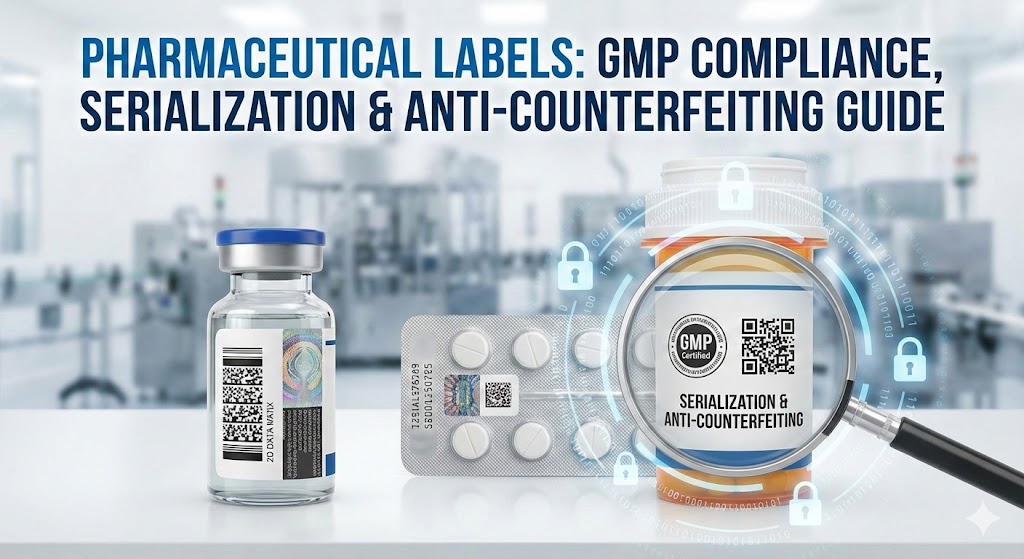
You can't afford to overlook pharmaceutical label compliance in today's complex regulatory environment. Every detail matters when protecting patient safety and ensuring product authenticity. From serialization requirements to anti-counterfeiting measures, the stakes are high. What if a single labeling error could compromise an entire supply chain? Your next steps could mean the difference between regulatory success and potential pharmaceutical risk.
How critical are pharmaceutical labels in today's complex healthcare landscape? They're the unsung guardians of patient safety, product integrity, and regulatory compliance.
Pharmaceutical labels aren't just stickers; they're sophisticated communication tools that guarantee traceability, authentication, and protection against counterfeiting. Through advanced serialization techniques, each label becomes a unique identifier, embedding critical information like batch numbers, expiration dates, and traceable barcodes such as GS1 DataMatrix.
Anti-counterfeiting features like security inks and holograms transform these labels into robust defense mechanisms against potential pharmaceutical fraud. Multi-layer label solutions provide additional security with advanced holographic and QR authentication elements that enhance product protection.
For manufacturers and healthcare providers, these labels represent more than documentation—they're a thorough system of quality assurance, patient protection, and supply chain security that meets the most stringent Good Manufacturing Practice (GMP) standards.
You'll encounter a complex web of global pharmaceutical labeling standards that demand meticulous attention to detail and compliance. Moving through this landscape requires understanding key regulatory bodies like the FDA, EMA, and WHO, which set rigorous guidelines for pharmaceutical packaging and labeling. Your success in meeting these standards hinges on adherence to Good Manufacturing Practice (GMP) requirements that guarantee product safety, efficacy, and traceability. Pharmaceutical manufacturers must also implement robust label serialization techniques to ensure product authentication and track individual packaging throughout the supply chain.
Although pharmaceutical markets continue to globalize, regulatory frameworks have evolved to guarantee thorough label standards that safeguard patient safety and supply chain integrity. Your understanding of global pharmaceutical labeling requires recognizing key international standards like GS1, which mandate serialization techniques and anti-counterfeit labels across diverse markets.
International regulations such as the EU Falsified Medicines Directive and US Drug Supply Chain Security Act drive comprehensive label requirements.
You'll find that ISO guidelines and global traceability standards like DataMatrix barcodes ensure consistent product identification.
These frameworks demand unique serialization codes, multilingual translations, and robust security features that enable precise tracking and verification of pharmaceutical products throughout complex global supply chains.
Pharmaceutical labels navigate a complex regulatory landscape governed by five key international agencies that set stringent standards for product identification, safety, and traceability. You'll encounter critical oversight from the EMA, FDA, WHO, GS1, and national health authorities who mandate thorough GMP labels and drug label requirements.
These agencies collaborate to enforce serialization labels that combat counterfeiting and ensure patient safety. They've established detailed guidelines for unique product identifiers, tamper-evident packaging, and electronic tracking systems.
Building upon the rigorous oversight from international regulatory bodies, Good Manufacturing Practice (GMP) requirements represent the gold standard for pharmaceutical label design and implementation.
These standards mandate thorough validation and meticulous documentation of every aspect of label production, from initial design to final printing.
You'll need to confirm your label materials, printing processes, and quality control mechanisms meet stringent regulatory criteria.
This means implementing robust traceability systems, maintaining precise manufacturing records, and conducting regular audits to verify compliance.
Your labels must demonstrate consistent legibility, durability, and accuracy, with each element carefully validated to prevent potential errors that could compromise patient safety or product integrity.
If you're managing pharmaceutical labeling in the UAE and GCC region, you'll need to understand the complex regulatory landscape spanning multiple national health authorities.
Your labels must meet stringent requirements from entities like the UAE Ministry of Health, Saudi SFDA, and GCC Drug Regulatory Authority, which mandate specific standards for product information, language, and safety.
These regulations cover critical aspects such as pharmacovigilance reporting, dual-language documentation, and detailed tracking mechanisms designed to guarantee patient safety and product authenticity.
Worldwide print capabilities from specialized label providers like Asas Label can help pharmaceutical companies navigate these complex regional compliance requirements efficiently.
How do global pharmaceutical manufacturers navigate the intricate labeling landscape of the United Arab Emirates?
The UAE Ministry of Health mandates stringent labeling protocols that demand meticulous attention to detail. Your pharmaceutical labels must include critical information like product name, batch number, expiration date, and manufacturing date to guarantee Good Manufacturing Practice (GMP) compliance.
You'll need to incorporate mandatory Arabic and English text, ensuring readability and durability. Tamper-evident features and anti-counterfeiting elements—such as holograms or security seals—are non-negotiable requirements.
Your packaging must precisely follow size, font, and placement guidelines specified in UAE and Gulf Cooperation Council pharmacopoeias, which serve as the definitive regulatory framework for pharmaceutical label design and implementation.
Guiding the intricate Saudi Food and Drug Authority (SFDA) pharmaceutical labeling requirements demands precision and strategic compliance. You'll need to verify your pharmaceutical labels meet rigorous standards that prioritize patient safety and product integrity.
SFDA mandates clear, bilingual labeling in Arabic and English, including critical details like expiration dates, batch numbers, and production dates.
Your labels must incorporate extensive traceability features aligned with Gulf Cooperation Council (GCC) standards. This means implementing tamper-evident seals, security holograms, and specialized anti-counterfeiting technologies.
You're expected to use standardized GS1-compliant barcodes like DataMatrix for precise product identification and serialization, ensuring maximum transparency and regulatory adherence throughout the pharmaceutical supply chain.
Building upon the Saudi SFDA's stringent requirements, pharmaceutical manufacturers must now navigate the extensive labeling standards set by the GCC Drug Regulatory Authority (GCC-DR) across the United Arab Emirates and Gulf Cooperation Council member states.
You'll need to verify your pharmaceutical labels include both Arabic and English text, meeting regional language compliance mandates.
Your labels must incorporate critical security features like tamper-evident elements, secure serialization, and QR codes connecting to national verification systems.
The GCC-DR requires specific data elements on each label, including product name, batch number, expiration date, manufacturing license number, and country of origin.
Furthermore, you'll need to design labels that can withstand extreme regional climatic conditions while maintaining legibility and integrity, adhering to strict Good Manufacturing Practice (GMP) standards.
Why do pharmaceutical labels play such a crucial role in pharmacovigilance across the UAE and Gulf Cooperation Council? They serve as vital communication tools for tracking product safety, enabling timely adverse event reporting, and maintaining rigorous monitoring standards.
Your labels must include specific pharmacovigilance details like batch numbers, expiry dates, and manufacturer contact information to support thorough traceability.
By incorporating clear instructions for healthcare professionals and patients on reporting side effects, you'll facilitate rapid identification and investigation of potential product issues.
The GCC mandates that these important safety elements be prominently displayed and easily accessible, ensuring that pharmaceutical packaging becomes an active participant in post-market surveillance and patient protection strategies.
When guiding global pharmaceutical labeling, you'll encounter complex regulatory landscapes across key markets like the United States, European Union, and World Health Organization jurisdictions. These international standards demand rigorous compliance with specific requirements that guarantee product safety, traceability, and authenticity. Regulatory frameworks like GSO and FDA establish comprehensive guidelines that mandate precise labeling protocols, ensuring pharmaceutical products meet stringent global quality and safety standards.
The FDA's pharmaceutical labeling requirements represent a thorough regulatory framework designed to guarantee patient safety, product transparency, and industry accountability.
You'll need to make certain your pharmaceutical product labels include critical elements like active ingredient, strength, dosage form, and approved indications, adhering strictly to FDA standards.
Your labels must incorporate a 2D data matrix barcode that encodes the National Drug Code (NDC), serial number, lot number, and expiry date. This serialization requirement supports product traceability and helps prevent counterfeiting.
Furthermore, you'll be required to implement tamper-evident packaging features such as breakable caps or seals that demonstrate product integrity and protect against unauthorized modifications.
Building upon the stringent FDA requirements, pharmaceutical manufacturers must now navigate the equally rigorous European Union pharmaceutical legislation landscape.
You'll need to implement thorough serialization protocols that meet the EU Falsified Medicines Directive (FMD) standards, which mandate unique identifiers on all medicinal product labels since 2019.
Your packaging must incorporate advanced anti-counterfeiting features like tamper-evident holograms and sophisticated security markings. The European Medicines Verification System (EMVS) will centralize and validate your product's serialized data across member states.
You'll also guarantee labels are printed in local languages, meet strict readability standards, and comply with international specifications like ISO 12931 and GS1 data matrix barcode requirements.
Exploring the intricate landscape of global pharmaceutical distribution requires manufacturers to adhere to the stringent WHO Prequalification Standards, which establish thorough guidelines for pharmaceutical labeling across international markets.
These comprehensive standards mandate precise label requirements that assure product safety, traceability, and universal comprehension.
WHO's guidelines dictate specific protocols for label design, emphasizing critical elements like batch numbers, expiry dates, manufacturing site information, and unique identifiers.
Manufacturers must implement international serialization conventions and incorporate advanced anti-counterfeiting features such as holograms and specialized security inks.
The prequalification process rigorously evaluates label printing techniques, material quality, and compliance with Good Manufacturing Practices (GMP), guaranteeing pharmaceutical labels meet the highest global standards of reliability and information integrity.
When designing pharmaceutical labels, you must carefully incorporate vital information across primary and secondary packaging. Your labels need to include crucial details like drug identification, manufacturer information, and mandatory regulatory symbols.
Understanding these requirements guarantees compliance and helps protect patient safety by providing clear, thorough product information.
In the complex world of pharmaceutical packaging, primary container labels serve as the vital first line of communication between manufacturers and end-users. You'll need to guarantee these labels capture fundamental details that safeguard product safety, authenticity, and traceability.
Key information must include the drug name, dosage form, strength, and a unique serial number that enables precise tracking throughout the supply chain.
Your labels must withstand various environmental challenges while maintaining legibility and durability. Regulatory standards mandate clear representation of batch numbers, expiration dates, and manufacturing plant details.
The precision of these elements is non-negotiable, as they play a pivotal role in patient safety and regulatory compliance.
How critical are secondary packaging labels in maintaining pharmaceutical integrity? They're absolutely vital for ensuring product safety, traceability, and regulatory compliance.
You'll need to include mandatory information like drug name, strength, dosage form, batch number, expiration date, and serial number to meet Good Manufacturing Practice (GMP) standards.
Your labels must incorporate scannable GS1 DataMatrix barcodes that enable precise serialization tracking.
You'll also want to design labels with high readability, ideal contrast, and durability to guarantee barcode scannability throughout the product's lifecycle.
Implementing tamper-evident features and security elements helps prevent counterfeiting and validates product authenticity, meeting stringent regulatory requirements from agencies like the EU FMD and US FDA.
Pharmaceutical labels serve as more than just product identifiers; they are vital communication tools that protect patient safety through strategic visual warnings and standardized symbols.
You'll find that GMP regulations mandate specific warning symbols like exclamation marks and biohazard icons to communicate potential hazards effectively. These internationally recognized symbols, as defined by ISO 15223-1, guarantee clear communication of risks across global markets.
By prominently displaying warnings such as "Keep Out of Reach of Children" and "Fragile" symbols, manufacturers help prevent misuse and potential accidents.
Mandatory label information includes essential storage instructions, handling precautions, and safety guidelines that guide healthcare professionals and patients in proper product management and usage.
As pharmaceutical supply chains grow increasingly complex, you'll need to understand drug serialization's critical role in ensuring product safety and authenticity.
You'll discover how unique identification requirements and regional regulations are transforming tracking technologies across global markets.
The evolving landscape of pharmaceutical supply chain management has ushered in drug serialization, a vital tracking mechanism designed to guarantee product authenticity and safety. By assigning a unique serial number to each saleable pharmaceutical unit, manufacturers create a digital fingerprint that enables precise traceability from production to patient.
Typically, serialized products feature a 2D Data Matrix barcode that encodes critical information like serial number, global trade identification number (GTIN), lot number, and expiration date.
This technological approach supports global regulatory requirements such as the EU Falsified Medicines Directive (FMD) and US Drug Supply Chain Security Act (DSCSA), which mandate electronic tracking to combat counterfeit drugs and improve supply chain transparency.
Although global supply chains become increasingly complex, unique identification requirements have emerged as a critical safeguard in pharmaceutical distribution. You'll need to understand that serialization isn't just a regulatory checkbox—it's an all-encompassing system ensuring product integrity.
Each pharmaceutical unit must carry a distinct identifier, typically a 2D DataMatrix barcode encoding vital data elements like GTIN, serial number, lot number, and expiration date. These unique identifiers enable real-time traceability, allowing you to track a product's entire journey through the supply chain.
Unique product identification sets the stage for understanding regional serialization requirements, which vary considerably across global pharmaceutical markets. Each jurisdiction mandates distinct tracking protocols that manufacturers must navigate carefully.
In the European Union, the Falsified Medicines Directive requires exhaustive serialization codes and tamper-evident packaging.
The United States' DSCSA demands manufacturers implement electronic track-and-trace systems with National Drug Code barcodes by November 2024.
Australia's framework similarly focuses on unique identifiers and secure packaging verification.
China's regulations emphasize real-time data reporting and stringent serial number tracking.
These diverse requirements challenge pharmaceutical companies to develop adaptable serialization strategies that can conform to complex regional compliance landscapes while maintaining global supply chain integrity and product authenticity.
While pharmaceutical serialization requires meticulous tracking, data hierarchy emerges as a critical framework for managing complex supply chain information.
By establishing interconnected levels of serialization data, you can effectively link individual pharmaceutical units to broader packaging configurations like cases, cartons, and pallets.
The hierarchical structure enables thorough tracking from granular unit-level details to aggregated shipment perspectives.
You'll leverage this approach to create a seamless, traceable pathway that captures each product's unique identifier and its relationship to larger packaging units.
This systematic organization not only enriches supply chain visibility but also supports efficient verification, recall management, and regulatory compliance across different organizational and regional boundaries.
How can pharmaceutical manufacturers transform their production lines to meet increasingly stringent serialization requirements?
You'll need to invest in high-speed printing equipment capable of applying unique DataMatrix 2D barcodes at rapid production rates. Your verification systems must guarantee precise barcode readability and prevent line disruptions.
Critical to success is integrating serialization data with your manufacturing execution systems (MES) and enterprise resource planning (ERP) platforms. This integration allows thorough tracking from individual package to case and pallet levels.
You'll also need robust data management capabilities to support regulatory compliance with frameworks like US DSCSA and EU FMD.
Proactive planning, rigorous process validation, and seamless partner collaboration are key to implementing an effective serialization strategy that meets global traceability standards.
The global pharmaceutical industry faces an escalating challenge with counterfeit drugs that pose serious health risks and economic losses.
You'll discover that cutting-edge anti-counterfeiting technologies have emerged as critical defenses against these sophisticated fraudulent practices.
Although the global pharmaceutical industry continues to advance, counterfeit drugs have emerged as a critical threat to patient safety and healthcare systems worldwide. These fraudulent medications pose significant risks, accounting for up to 10% of medicines in some markets. Fake drugs not only undermine patient health but also erode trust in pharmaceutical supply chains and healthcare providers.
The scale of the counterfeit drug problem is alarming, with criminal networks exploiting vulnerabilities in manufacturing and distribution processes. Patients are exposed to potentially dangerous substances that may lack active ingredients, contain harmful contaminants, or be entirely ineffective.
Regulatory bodies and pharmaceutical companies are increasingly investing in sophisticated anti-counterfeiting technologies to combat this growing global challenge.
Could pharmaceutical manufacturers effectively combat counterfeit drugs through visible, cutting-edge security features?
Overt security technologies offer an immediate, visual solution to drug authentication challenges.
These technologies include holograms, color-shifting inks, embossed logos, and tamper-evident seals that can be quickly verified by consumers, healthcare providers, and inspectors without specialized equipment.
How do pharmaceutical manufacturers create an invisible shield against counterfeiters? They deploy sophisticated covert security features that remain undetectable to the naked eye. These advanced technologies include microtext, nano printing, fluorescent fibers, and infrared markers that can only be verified using specialized equipment.
By embedding these intricate identifiers within pharmaceutical labels and packaging, manufacturers establish a robust defense mechanism against fraud. The features comply with ISO 12931 standards and provide a critical layer of authentication that standard printing technologies can't replicate.
Regulatory bodies, manufacturers, and pharmacies can confidently validate product authenticity without alerting potential counterfeiters to their verification methods.
These invisible security elements transform pharmaceutical packaging into a complex, multi-layered protective system that safeguards product integrity and patient safety.
Since the pharmaceutical industry faces escalating challenges from counterfeiters, digital authentication technologies have emerged as a vital defense mechanism for protecting drug supply chains.
By integrating advanced tracking and verification systems, manufacturers can now deploy sophisticated solutions that offer multi-layered security.
2D barcodes like QR codes and DataMatrix encode unique serial numbers and anti-tampering data, enabling rapid product verification at essential points of distribution.
These digital markers allow healthcare professionals and consumers to instantly validate pharmaceutical authenticity using simple scanning technologies.
Specialized covert markers and forensic authentication techniques provide additional protective layers.
These advanced features, detectable only through specific tools, create nearly impenetrable barriers against sophisticated counterfeiting attempts, with some solutions reporting over 95% detection effectiveness.
As digital authentication technologies continue to evolve, pharmaceutical manufacturers are amplifying their defense strategies with tamper-evident labels—a robust frontline protection against counterfeiting and product tampering.
These sophisticated security labels incorporate physical and visual features like tear strips, break seals, and holograms that immediately reveal unauthorized package access.
By utilizing overt, covert, and forensic security elements such as special inks, micro-text, and taggant particles, manufacturers can authenticate genuine medications and deter counterfeiting attempts.
The ISO 12931 standard provides thorough guidelines for validating these protective features, ensuring consistent anti-counterfeiting performance.
Strategic label placement and design further improve visibility and effectiveness, making tampering visually apparent and safeguarding patient safety across pharmaceutical supply chains.
When selecting materials for pharmaceutical labels, you must consider multiple essential factors that guarantee compliance, performance, and safety.
Your substrate choice, adhesive selection, ink specifications, and durability testing are paramount in creating labels that withstand rigorous pharmaceutical environments.
Each material component plays a vital role in maintaining label integrity, regulatory adherence, and product protection throughout the pharmaceutical supply chain.
Since pharmaceutical labels serve critical functions beyond mere identification, selecting the right substrate becomes a strategic decision that directly impacts product safety, compliance, and information integrity.
You'll need to choose materials that can withstand challenging environments while maintaining label performance and readability.
Your substrate selection must prioritize durability, chemical resistance, and compatibility with packaging processes.
Thermal paper, polypropylene, and polyester are popular options that offer excellent resilience against moisture, abrasion, and temperature variations.
These synthetic materials guarantee your labels remain legible and securely attached throughout the product's lifecycle.
Consider regulatory requirements that mandate high-quality print surfaces compatible with RFID and barcode scanning technologies.
Your chosen substrate should support serialization and anti-counterfeiting features without compromising label integrity.
Although pharmaceutical labels represent critical communication tools, the adhesive's performance can make or break their effectiveness. You'll need to select adhesives that withstand challenging environmental conditions plus maintaining label integrity throughout the product's lifecycle.
Your chosen adhesive must meet stringent pharmaceutical requirements, including biocompatibility, resistance to damp and temperature variations, and compatibility with diverse packaging surfaces like glass, plastic, and foil.
Furthermore, consider specialized adhesive technologies that support tamper-evident features and anti-counterfeiting measures.
Regulatory compliance demands adhesives that won't leach harmful substances or compromise product safety. You'll want materials that guarantee secure attachment, preserve label readability, and maintain performance from manufacturing through the product's entire shelf life.
Since pharmaceutical labels serve as critical communication channels for drug safety and information, the selection of specialized inks and coatings becomes paramount to ensuring label performance and regulatory compliance. You'll need to choose inks that resist smudging, fading, and chemical exposure while maintaining readability throughout the drug's shelf life.
Your coatings must provide durability against abrasion, humidity, and environmental factors to preserve print integrity and support tamper-evidence requirements. Furthermore, these materials must strictly adhere to pharmacopeial standards like USP <861> and <855>, ensuring compatibility with various label substrates including paper, film, and foil.
Regulatory authorities demand specific optical and chemical properties, such as high-contrast barcodes and resistance to cleaning and sterilization processes.
When pharmaceutical labels face the rigorous demands of complex storage and distribution environments, durability testing emerges as a critical quality assurance mechanism. You'll need to expose labels to accelerated aging conditions that simulate real-world challenges like high temperature and humidity.
Standard assessments evaluate rub resistance, scratch durability, and adhesive strength to confirm labels remain scannable and intact throughout their lifecycle.
Polyester, polypropylene, and vinyl materials undergo intensive testing to verify their ability to withstand environmental stresses including moisture, heat, and chemical exposure. These tests guarantee labels maintain readability and security features mandated by regulatory guidelines like the EU FMD and US DSCSA, protecting against counterfeiting and preserving critical product information.
When conducting clinical trials, you'll need to navigate complex labeling requirements that guarantee precise identification and tracking of investigational products.
Your labels must incorporate unique identifiers, trial codes, and critical data points while maintaining strict compliance with Good Manufacturing Practice (GMP) standards.
Understanding the nuances of booklet labels, on-demand printing advantages, and randomization coding will help you manage the intricate documentation demands of pharmaceutical research and development.
Since clinical trials represent a critical phase in pharmaceutical research and development, labeling requirements play a pivotal role in ensuring data integrity, regulatory compliance, and patient safety. You'll need to include specific elements like trial identification numbers, investigational product names, lot numbers, and expiration dates to meet regulatory standards.
Your labels must be tamper-evident and clearly distinguishable from commercial product labels to prevent potential mix-ups. Regulatory agencies like the FDA and EMA mandate that these labels incorporate unique identifiers such as QR codes or DataMatrix barcodes to facilitate precise data capture.
You'll also want to use durable materials that can withstand various handling and storage environments as well as maintaining compliance with Good Laboratory Practice (GLP) standards throughout the clinical trial process.
While clinical trials represent a complex and highly regulated research environment, booklet labels serve as vital communication tools that bridge the gap between investigational products and extensive documentation. These specialized labels capture indispensable tracking and identification details that are essential for maintaining research integrity and regulatory compliance.
You'll need booklet labels that incorporate multiple panels of information, including protocol numbers, participant identifiers, batch tracking codes, and precise expiration dates.
The design must withstand rigorous clinical storage and transportation conditions while providing clear, high-resolution print that remains legible throughout the product's lifecycle.
Advanced booklet labels also integrate tamper-evident and anti-counterfeiting features, ensuring the investigational product's authenticity.
These features help prevent potential falsification risks during clinical research processes.
In the rapidly evolving landscape of clinical research and pharmaceutical development, on-demand printing emerges as a game-changing solution for label production. You'll appreciate how this technology dramatically reduces lead times from weeks to hours, enabling rapid label modifications in response to dynamic trial requirements.
By supporting variable data printing, on-demand printers allow you to customize labels with precise batch numbers, expiration dates, and unique serial codes tailored to specific experiments.
The flexibility of these printers minimizes pre-printed label inventory, greatly decreasing waste and storage costs.
Additionally, high-resolution, compliant labels produced on-demand ensure you consistently meet GMP standards while maintaining robust traceability and powerful anti-counterfeiting features critical to pharmaceutical research and development.
How critical are randomization and coding in maintaining the scientific integrity of clinical trials and research and development (R&D) processes?
They're fundamental to ensuring unbiased subject distribution and protecting proprietary formulations. By implementing systematic, computer-generated codes, you can create unique serial identifiers that prevent sample duplication and maintain traceability.
Your randomization strategies must adhere to Good Manufacturing Practice (GMP) standards, generating codes with sufficient entropy to secure individual trial samples.
These specialized codes not only facilitate regulatory compliance with GxP guidelines but also enable precise data analysis and comprehensive sample reconciliation.
Effective coding becomes your shield against counterfeiting and your tool for maintaining rigorous experimental protocols.
In the complex world of pharmaceutical labeling, you'll need to understand how Variable Data Printing (VDP) transforms product identification and tracking.
You'll discover how this technology enables precise batch-specific information, unique serialization data, and market-specific label variations across production lines.
When steering through the complex landscape of pharmaceutical manufacturing, Variable Data Printing (VDP) emerges as a critical technology for ensuring precise batch-specific labeling.
You'll find that VDP enables dynamic printing of unique identifiers like serial numbers, lot codes, and expiration dates directly onto pharmaceutical packaging.
This creates an unparalleled level of traceability.
Bridging from batch-specific tracking, serialization data represents the pinnacle of pharmaceutical packaging precision through Variable Data Printing (VDP). You'll find these dynamic codes capture unique serial numbers, batch details, and expiry dates directly on each package during production.
High-speed thermal inkjet and laser technologies enable manufacturers to print scannable, human-readable codes that strictly comply with Good Manufacturing Practice (GMP) standards.
Your serialization strategy must incorporate rigorous quality checks like Quickscan validation to verify barcode readability and prevent costly line stoppages.
Precise data placement matters critically, avoiding low-contrast surfaces or packaging gloss that could impair scanning reliability.
These unique identifiers ultimately support real-time tracking across supply chain partners, facilitating regulatory compliance with frameworks like FDA DSCSA and EU FMD.
Every pharmaceutical market presents unique labeling challenges that demand sophisticated Variable Data Printing (VDP) solutions. Your ability to adapt labels for regional requirements is critical in global pharmaceutical distribution.
VDP technology enables you to customize labels with precise market-specific variations, including language translations, allergen declarations, and regulatory symbols.
You'll find that this approach dramatically reduces lead times and inventory complexities.
By implementing dynamic printing capabilities, you can swiftly modify labels to comply with diverse international regulations.
Each label becomes a tailored communication tool, ensuring that product information meets the exact specifications of different markets although maintaining strict compliance standards.
Pharmaceutical manufacturers must recognize that Variable Data Printing (VDP) technology represents far more than a simple labeling solution—it's a mission for ensuring product integrity, regulatory compliance, and patient safety.
You'll need advanced digital printing technologies like thermal inkjet and laser systems that can generate clear, scannable barcodes and unique serial numbers at high production speeds.
Your VDP workflow must include validated process controls to prevent critical errors such as duplicate serial numbers or misaligned label information.
Integration with manufacturing execution systems becomes crucial, enabling real-time data accuracy and seamless traceability across packaging levels.
In the pharmaceutical industry, you'll encounter specialized label types designed for precise medical applications. These labels serve critical functions across various medical packaging formats, from vials and ampoules to blister packs and IV bags.
Each specialized label type addresses unique storage, identification, and tracking requirements vital for maintaining product safety and integrity.
Since pharmaceutical vials require meticulous labeling, manufacturers must adhere to stringent global standards that guarantee product safety, authenticity, and traceability.
Your vial labels must comply with Good Manufacturing Practice (GMP) regulations, guaranteeing legibility, durability, and secure attachment without compromising sterility.
You'll need to incorporate sophisticated anti-counterfeiting features like holograms, tamper-evident seals, and specialized security inks.
Serialization is critical, requiring unique serial numbers, barcodes, or 2D data matrix codes that enable extensive supply chain tracking.
High-precision printing techniques such as thermal inkjet and laser engraving ensure superior barcode readability and environmental resistance.
Essential label information must include drug name, dosage, batch number, expiration date, and manufacturer details, all precisely aligned with regional regulatory requirements.
Although sterile and delicate, ampoule labels represent a critical component in pharmaceutical packaging that demands exceptional precision and technological sophistication.
You'll need to verify these labels meet stringent Good Manufacturing Practice (GMP) standards, featuring clear legibility and resistance to challenging processing conditions like moisture and alcohol exposure.
Your ampoule labels must incorporate advanced serialization techniques, utilizing high-resolution printing technologies such as thermal inkjet or laser engraving to print unique serial numbers and barcodes.
Moreover, you'll want to implement robust anti-counterfeiting measures like holograms, UV-visible inks, and covert authentication features to verify product integrity.
These specialized labels must withstand sterilization processes while maintaining complete legibility and structural integrity throughout storage and distribution cycles.
Building upon the intricate world of pharmaceutical labeling, blister pack labels represent a sophisticated segment that demands meticulous attention to detail and advanced technological integration.
You'll need to guarantee these labels meet stringent pharmaceutical requirements, incorporating high-contrast QR codes and barcodes that withstand rigorous handling and storage conditions.
Tamper-evident features like holograms and security seals are vital for preventing counterfeiting and protecting product integrity.
Your labels must clearly display necessary GMP-mandated information, including batch numbers, expiration dates, active ingredients, and serial numbers.
Specialized security inks and covert authentication features can further improve label effectiveness.
Precise label placement and validation are pivotal, enabling seamless automated scanning throughout manufacturing and supply chain logistics, ultimately safeguarding pharmaceutical product quality and traceability.
Although intravenous (IV) therapy represents a critical medical intervention, the labels adorning IV bags play a pivotal role in ensuring patient safety and regulatory compliance.
These specialized labels must meet rigorous Good Manufacturing Practice (GMP) standards, incorporating serialization data like unique serial numbers and barcodes to support traceability and combat counterfeiting.
You'll find that IV bag labels are engineered to withstand sterilization processes, liquid exposure, and constant handling while maintaining legibility and scanability.
Regulatory frameworks such as EU FMD and US DSCSA mandate specific label features to confirm product authenticity.
Advanced labeling technologies now integrate tamper-evident seals and covert security elements, providing multiple layers of protection and ensuring the integrity of critical medical supplies.
Since patient safety hinges on precise medical information, pharmaceutical syringe labels represent a critical nexus of regulatory compliance and vital care communication.
You'll need to guarantee these labels meet rigorous GMP standards, incorporating fundamental details like drug name, dosage, and expiration date with absolute clarity and durability.
Your syringe labels must also incorporate advanced security features, including tamper-evident design and serialization technologies.
Unique serial numbers and barcodes enable extensive supply chain traceability, while resilient label materials withstand sterilization procedures and challenging environmental conditions.
Regulatory bodies like the FDA and EU mandate strict requirements for syringe label content, readability, and anti-tampering mechanisms, making compliance an unavoidable aspect of pharmaceutical packaging.
When pharmaceutical manufacturers prioritize patient safety, bottle and container labels emerge as critical communication tools that transcend mere packaging. These specialized labels integrate sophisticated security features like holographic elements, UV coatings, and serialized QR codes to prevent counterfeiting and confirm product authenticity.
Designed to meet strict Good Manufacturing Practice (GMP) standards, pharmaceutical bottle labels must withstand complex environmental conditions while maintaining readability and scan integrity. They incorporate vital regulatory information including batch numbers, expiry dates, and unique product identifiers using advanced technologies like GS1 data matrix barcodes.
The precision of label materials and application methods directly impacts product traceability, patient safety, and regulatory compliance throughout the pharmaceutical supply chain.
As a pharmaceutical professional, you'll need robust quality control systems to verify label compliance and accuracy.
Your GMP quality systems must thoroughly validate labeling processes, covering everything from artwork review to final print verification.
Although pharmaceutical labeling demands exceptional precision, Good Manufacturing Practice (GMP) quality systems represent the critical framework ensuring product safety, efficacy, and regulatory compliance. These all-encompassing systems establish rigorous validation protocols that methodically assess every aspect of label production and application.
Your validation activities will systematically include Installation Qualification (IQ), Operational Qualification (OQ), and Performance Qualification (PQ). These structured evaluations confirm that label printing and serialization processes consistently operate within predefined parameters.
How critical is label verification in maintaining pharmaceutical product integrity? It's absolutely vital for ensuring patient safety and regulatory compliance.
Your label verification process must meticulously inspect printed codes for readability, accuracy, and adherence to strict GMP specifications.
You'll need to validate labeling equipment to confirm it produces scannable, high-quality barcodes, including 2D DataMatrix codes, meeting a predefined acceptable quality level (AQL).
Your quality control checks will verify that serialization data like serial numbers and expiration dates match manufacturing records precisely.
Regular calibration of label printers and vision systems prevents potentially costly printing errors that could trigger compliance issues or devastating product recalls.
Extensive documentation of validation protocols creates an audit trail demonstrating your commitment to quality and anti-counterfeiting measures.
Why do pharmaceutical manufacturers obsess over validation requirements? Because these stringent protocols assure your serialization systems are bulletproof. Validation isn't just a checkbox—it's your defense against potential quality breaches and regulatory violations.
You'll need thorough IQ, OQ, and PQ testing phases to guarantee your electronic batch records maintain absolute data integrity and accuracy.
Your validation must rigorously test hardware, software, and connectivity, leaving zero room for errors that could compromise product traceability. When system changes, software updates, or process modifications occur, continuous revalidation becomes mandatory.
Meticulous documentation creates robust audit trails that prove your labeling processes meet the most demanding regulatory standards, protecting both your product's quality and your company's reputation.
Ever wondered why pharmaceutical label artwork review is a critical gateway to product safety? This meticulous process guarantees every label meets stringent quality standards before reaching patients.
You'll navigate through a thorough validation journey that scrutinizes serial numbers, barcodes, safety icons, and design alignment with exacting precision.
Quality control teams verify critical elements like barcode readability (minimum 10DPI), color contrast, and dimensional accuracy. They'll conduct rigorous print simulations and batch testing to detect potential defects—from subtle smudges to misalignments that could compromise scanning or verification processes.
Each review confirms your artwork's compliance with GMP standards, protecting product integrity and patient safety through methodical, documented assessments that leave no detail unchecked.
When handling pharmaceutical labels, you'll encounter specialized requirements for cold chain, controlled substances, and hazardous drug products.
Each category demands precise storage protocols to maintain label integrity and guarantee patient safety.
Understanding these nuanced labeling strategies helps you navigate the complex regulatory landscape of pharmaceutical packaging.
In the complex world of pharmaceutical logistics, cold chain labels represent a critical safeguard for temperature-sensitive medications and biologics. You'll find these specialized labels designed with high-contrast, durable materials that can withstand extreme temperatures, humidity, and rigorous handling during transportation and storage.
They're not just simple identifiers; they're sophisticated tracking systems featuring tamper-evident seals, barcodes, and QR codes that enable real-time monitoring of storage conditions. These labels must include precise temperature-sensitive indicators and clear storage instructions to prevent potential temperature excursions that could compromise drug efficacy.
Since pharmaceutical controlled substances represent a critical category of medications with significant regulatory oversight, their labeling demands meticulous attention to detail and strict compliance with federal guidelines.
You'll need to guarantee that labels clearly identify the drug's Schedule classification and include specific storage instructions such as temperature requirements and secure storage protocols.
Your labels must incorporate tamper-evident features to maintain packaging integrity and prevent unauthorized access.
Detailed handling instructions should emphasize keeping substances out of reach of children and unauthorized personnel.
Moreover, labels must remain durable and legible under various environmental conditions, preserving critical information throughout the product's shelf life.
How critical are pharmaceutical labels when it comes to hazardous drug storage and handling? They're absolutely vital for ensuring safety and compliance.
Your labels must include clear hazard symbols like Caution or Danger pictograms that instantly communicate potential risks.
You'll need to specify precise storage conditions, such as "Store in a well-ventilated area" or "Keep away from children," which protect against accidental exposure.
Proper labeling requires thorough handling instructions that outline required personal protective equipment (PPE) in line with OSHA standards.
Regulatory statements like "warning" or "hazardous, avoid inhalation" are mandatory to effectively communicate potential dangers.
You'll find that package inserts and information leaflets are vital components of pharmaceutical packaging, serving multiple crucial functions. These documents must meet stringent regulatory requirements and provide clear, complete information to patients and healthcare professionals.
Their design involves careful consideration of multi-language accessibility, anti-counterfeiting features, and seamless integration with product labeling to secure patient safety and regulatory compliance.
Why do pharmaceutical labels demand such meticulous attention to detail? Regulatory agencies worldwide mandate thorough, precise labeling to guarantee patient safety and product integrity.
You'll find that the EU's Falsified Medicines Directive and US FDA guidelines require exhaustive information on drug packaging, including active ingredients, usage instructions, warnings, and batch numbers.
Your labels must be truthful, not misleading, and include standardized elements like drug strength, administration route, and potential contraindications. They've got to be durable, tamper-evident, and accessible in local languages.
These strict requirements protect consumers by facilitating proper medication use and preventing counterfeiting, making each package insert a critical communication tool in healthcare delivery.
Ever wondered why pharmaceutical companies invest so heavily in multi-language leaflets? These vital documents guarantee patient safety and regulatory compliance across diverse international markets.
By translating package inserts and information leaflets into multiple languages, pharma firms provide crucial product details like indications, dosage instructions, contraindications, and storage conditions.
The European Union mandates that patient information leaflets (PILs) be available in official member state languages, often requiring 2-5 translations per product.
Accurate translation isn't just a preference—it's a regulatory requirement. Pharmaceutical companies must guarantee precise communication to prevent misinterpretation, with regulatory agencies rigorously verifying the correctness of each language version before granting approval.
Since pharmaceutical labeling represents a critical intersection of patient safety and regulatory compliance, integrating package inserts and information leaflets with product labels demands meticulous attention to detail.
You need to confirm consistent product information across all materials while meeting stringent Good Manufacturing Practice (GMP) standards.
Modern labeling technologies enable seamless integration through digital mechanisms like QR codes and serial numbers. These innovative solutions link physical labels directly to extensive digital information, enhancing traceability and accessibility.
By implementing dynamic digital platforms, you can rapidly update package inserts and guarantee real-time regulatory compliance without costly physical reprints.
This approach not only streamlines information management but also considerably reduces the risk of misinformation and potential patient safety issues.
When steering pharmaceutical label compliance, you'll need thorough documentation that proves your commitment to regulatory standards.
Your documentation must include Certificates of Analysis, Material Safety Data Sheets, detailed regulatory filing requirements, robust audit trail records, and clear change notification procedures.
These critical documents serve as your defense mechanism, demonstrating adherence to Good Manufacturing Practices (GMP) and ensuring your pharmaceutical labels meet the stringent requirements of agencies like the FDA and EMA.
Since pharmaceutical quality and safety are paramount, Certificates of Analysis (CoAs) represent critical documentation that validates a product's compliance with stringent industry standards.
These official documents verify that your pharmaceutical product meets predetermined quality, safety, and efficacy requirements through detailed batch-specific test results.
CoAs are generated by manufacturing or testing laboratories and provide thorough insights into active ingredients, potential impurities, and performance metrics.
Regulatory agencies like the FDA mandate these certificates to confirm Good Manufacturing Practices (GMP) compliance.
You'll need to guarantee your CoAs are accurate, exhaustive, and readily available for potential audits or inspections.
Digital and standardized CoA formats enable seamless information sharing with downstream partners, auditors, and regulatory authorities, enhancing transparency and regulatory alignment.
Since pharmaceutical safety demands rigorous documentation, Material Safety Data Sheets (MSDS) have become indispensable compliance tools in modern pharmaceutical labeling. These vital documents outline thorough safety protocols for chemical ingredients, ensuring workers understand precise handling, storage, and disposal procedures.
You'll find standardized SDS formats mandated by international regulations like OSHA and GHS, which require specific sections covering hazard identification, composition details, first-aid measures, and accidental release procedures.
For pharmaceutical manufacturers, these sheets aren't just paperwork—they're key risk management instruments that verify labeling materials meet stringent safety and environmental standards.
In serialization and anti-counterfeiting packaging, SDS serve as foundational supporting documentation, demonstrating a company's commitment to transparency and regulatory compliance.
Building upon the meticulous safety documentation established in Material Safety Data Sheets, pharmaceutical manufacturers must navigate complex regulatory filing requirements that demand thorough compliance documentation.
You'll need to submit detailed validation reports demonstrating label printing accuracy, tamper-evident features, and barcode readability to regulatory agencies like the FDA and EU EMA.
Your submission must include extensive specifications covering label materials, ink types, and detailed security features designed to prevent counterfeiting.
Verification processes, validation protocols, and complete audit trails are critical to proving that your labels meet approved Good Manufacturing Practice (GMP) parameters.
These filings typically coincide with product registration or re-licensing cycles, ensuring ongoing compliance with current serialization and anti-counterfeiting regulations.
Although pharmaceutical label compliance demands meticulous record-keeping, audit trail documentation represents the critical backbone of regulatory verification and product safety.
You'll need thorough electronic logs that capture every serialization activity, including printing, verification, and rework events, with precise timestamps and user identities.
Your documentation must meet stringent 21 CFR Part 11 standards, ensuring all electronic records are accurate, complete, and tamper-evident.
Automated systems should generate logs detailing printer serial numbers, batch information, and scan results, demonstrating adherence to Good Manufacturing Practice (GMP) requirements.
These unalterable audit trails provide critical evidence during inspections, support traceability, and serve as vital documentation for potential counterfeiting investigations or recall procedures.
Tracking every modification in pharmaceutical labeling requires rigorous change notification procedures that protect product integrity and regulatory compliance.
You'll need to document and communicate all packaging, labeling, and serialization process changes formally to regulatory authorities before implementation.
Your documentation must include detailed records of the proposed change, including its rationale, exhaustive impact assessment, and validation results.
Regulatory agencies like the FDA or EMA mandate specific submission processes through systems such as Prior Notice or Variations submissions.
Different changes require varying notification timelines.
Major modifications demand prior approval, while minor adjustments might only need post-implementation documentation.
Maintaining meticulous, up-to-date change notification records ensures audit readiness and continuous compliance with serialization and anti-counterfeiting regulations.
How do pharmaceutical companies guarantee their products remain safe, traceable, and compliant in an increasingly complex global market? ASAS Label provides extensive pharmaceutical label solutions designed to meet these critical challenges. Their specialized labels incorporate advanced serialization features like 2D DataMatrix barcodes and unique serial numbers, ensuring regulatory compliance worldwide.
By integrating cutting-edge anti-counterfeiting technologies—including overt, covert, and forensic security elements—ASAS protects brand integrity and product authenticity. Their custom label designs adapt to diverse packaging environments, from cold chain logistics to hospital and retail settings.
With seamless integration capabilities for serialization and traceability systems, ASAS Label supports pharmaceutical manufacturers in meeting stringent global standards like EU FMD and US DSCSA, transforming label technology into a strategic compliance solution.
Why do pharmaceutical professionals consistently seek clarity about label requirements and best practices? The complexity of GMP compliance, serialization, and anti-counterfeiting measures demands precise understanding.
You'll want to know how 2D DataMatrix barcodes encode vital product information, why tamper-evident seals are essential, and how regulatory frameworks like EU FMD and US DSCSA impact label design.
Pharmaceutical labels aren't just stickers; they're sophisticated tracking and authentication tools. You must guarantee readability, environmental resistance, and scanning accuracy.
Understanding these nuanced requirements helps prevent counterfeiting, maintain supply chain integrity, and meet stringent industry standards. Your label's design isn't just about aesthetics—it's a critical component of product safety and regulatory compliance.
The landscape of pharmaceutical labeling represents a dynamic intersection of technology, regulatory compliance, and supply chain security. Your success in this critical domain hinges on embracing thorough labeling strategies that integrate serialization, anti-counterfeiting features, and rigorous verification protocols.
By prioritizing advanced labeling solutions, you'll not only meet stringent GMP requirements but also protect patient safety and brand integrity.
The future of pharmaceutical labeling demands continuous innovation, with cutting-edge technologies like forensic markers, smart barcodes, and intelligent tracking systems becoming increasingly vital.
Partnering with experienced labeling solution providers will help you navigate complex regulatory landscapes and maintain a competitive edge in an ever-evolving pharmaceutical market.